

UK FACE Congress 2027 · International Masterclass

British Advanced Rhinoplasty Course

Dr Emre Ilhan · Dr Fas Arshad, Host & Chair

Sidewall engineering. Cylindrical burrs. Piezo.

Study precision rhinoplasty with Dr Emre Ilhan: the analysis, instrument choices and controlled reshaping behind the operative plan. Follow a live case with expert moderation, then work through advanced techniques in the fresh-frozen cadaver lab.

Dr Emre Ilhan. Live surgery in the UK.

  • 20–21 March 2027
  • Leeds, United Kingdom
  • Live surgery at Leeds Private Hospital + fresh-frozen cadaver teaching
Hands-on DissectorStandard fee £7,500£5,950
Observer£3,250

Workshop sponsored by ACTEON

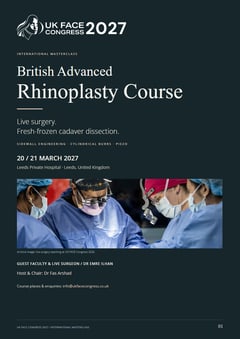
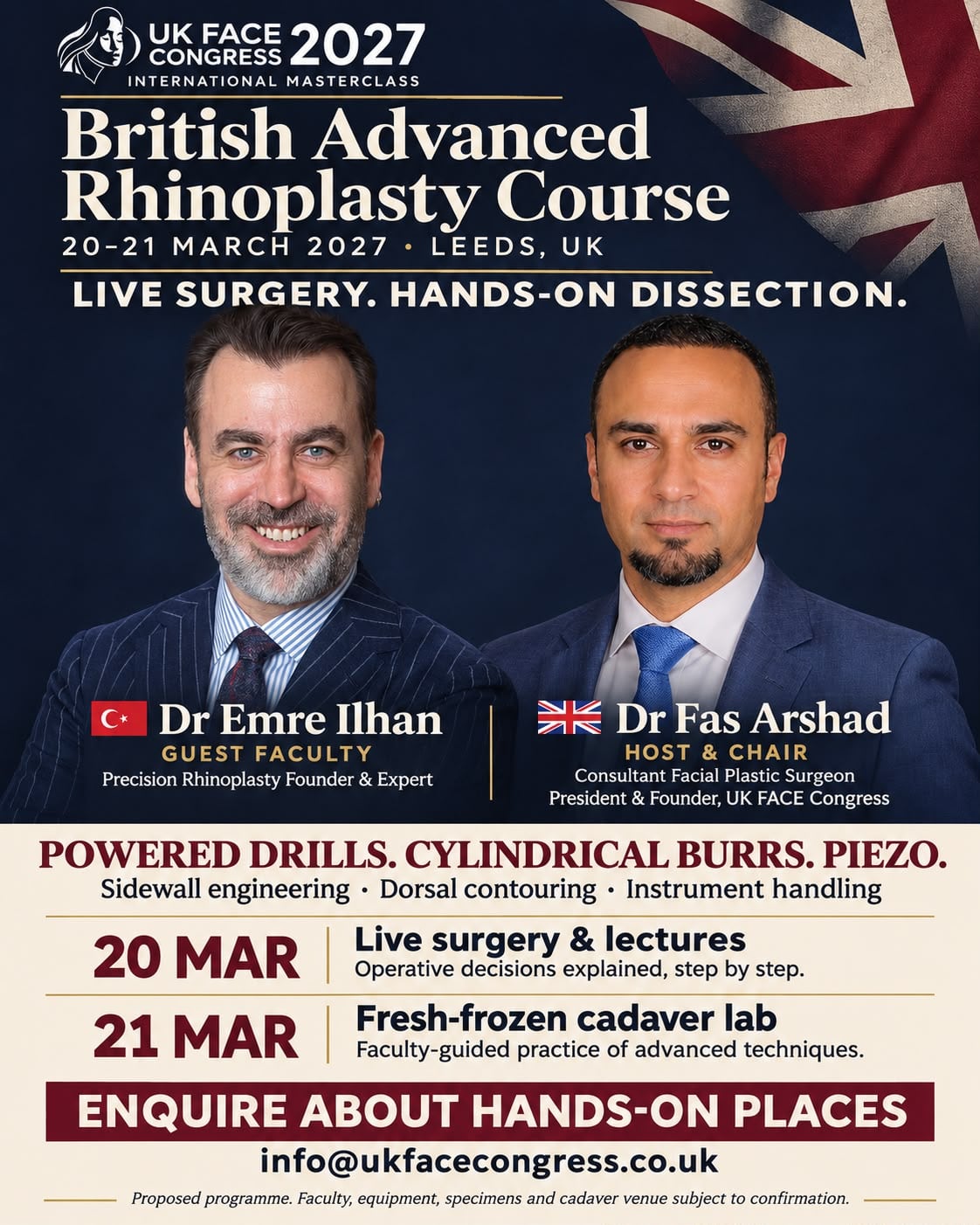
British Advanced Rhinoplasty Course flyer: 20–21 March 2027, Leeds. Dr Emre Ilhan, guest faculty, and Dr Fas Arshad, host and chair. Powered drills, cylindrical burrs and piezo. 20 March live surgery and lectures, 21 March fresh-frozen cadaver lab.

Teaching faculty

Your teaching faculty

Read faculty profiles
  • Dr Emre Ilhan

    Guest Faculty & Live Surgeon

    Dr Emre Ilhan

    Türkiye

  • Dr Fas Arshad

    Host & Chair

    Dr Fas Arshad

    United Kingdom

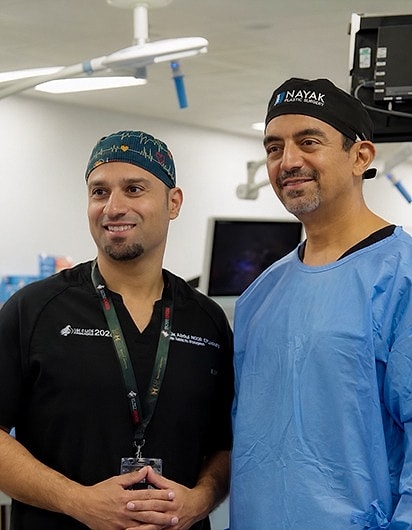
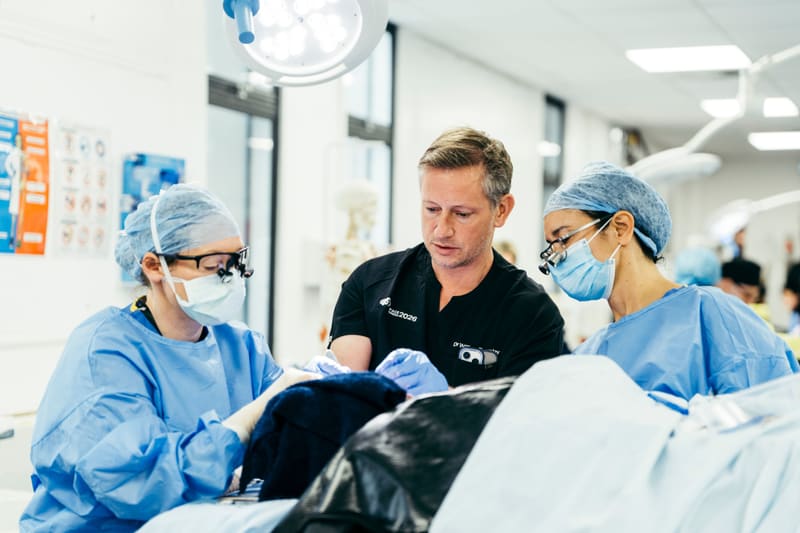
Dr Mike Nayak (right) at the UK FACE Congress 2026 cadaver lab

UK FACE Congress 2026 · Cadaver lab feedback

The quality of the lab is spectacular. Equipment quality has been great. This specimen quality has been great. So I think it’s a really wonderful educational opportunity and a great teaching opportunity.

Dr Mike NayakWorld-renowned facial plastic surgeon, St. Louis, USASpeaking about the UK FACE Congress 2026 cadaver lab
Watch full video

Endorsements & affiliations

  • European Academy of Facial Plastic Surgery (EAFPS)
  • Royal College of Surgeons of England
  • University of Leeds
  • The CPD Certification ServiceCPD application planned

Precision rhinoplasty

See the anatomy. Understand the change. Refine the result.

  • Sidewall engineering
  • Cylindrical burrs
  • Piezo

Precision rhinoplasty is about deliberate decisions: what needs to change, which instrument gives the appropriate control, and how to assess the effect of each manoeuvre. Explore Dr Ilhan’s approach to the nasal framework, dorsal lines and sidewall shape, then relate those choices to support, function and the patient’s anatomy.

The aim is a more controlled and repeatable approach, developed through observation, explanation and supervised practice.

The two-day learning journey

From live precision rhinoplasty to guided cadaver practice

Join two focused days connecting live rhinoplasty with supervised fresh-frozen cadaver teaching. Examine how instrument choice, anatomy and operative strategy come together, then explore the planned practical techniques with faculty instruction and feedback.

Day 1 · Saturday 20 March

Live surgery

The patient, the plan and the live operation.

Teaching starts with patient assessment, operative planning and surgical markings. Dr Emre Ilhan’s operation is presented in extended blocks with moderation by Dr Fas Arshad, connecting the visible anatomy with the decisions being made. The sequence adapts to the patient and clinical requirements.

See the Day 1 timetable
Day 2 · Sunday 21 March

Fresh-frozen cadaver lab

See the approach. Work through the anatomy. Ask the questions.

Step-by-step demonstrations, supervised practice and faculty checkpoints connect the live-surgery discussion with anatomical orientation, cylindrical-burr sidewall work, piezo applications and dorsal strategy.

See the practical day

From observation to guided practice

  1. 01

    Observe

    Follow live decisions.

  2. 02

    Discuss

    Understand instrument choice.

  3. 03

    Practise

    Work through supervised tasks.

  4. 04

    Review

    Use faculty feedback.

Technical curriculum

What you will take back to your practice

A clearer framework for planning, instrument selection and technical review; a direct view of expert decision-making; and supervised experience of the cadaver tasks taught during the course.

01

Analysis before instrumentation

Relate patient concerns, skin envelope, asymmetry, support and airway assessment to a specific plan. Understand why that plan may change.

02

Sidewall engineering

Examine sidewall shape, bony asymmetry, dorsal aesthetic lines and the transition between nose and face. Relate the intended contour to the visible anatomy.

03

Powered cylindrical burrs

Compare instrument choice, access, handling and controlled contour modification. Discuss how burr work fits preservation and structural strategies.

04

Piezo and powered tools together

Understand their distinct roles. Explore when an ultrasonic tip, burr or another instrument is appropriate, including limitations and tissue protection.

05

Dorsal strategy and support

Connect contour changes with the middle vault, support and function. Explore preservation, structural and combined approaches.

06

Tip and challenging anatomy

Discuss how tip support, skin characteristics and previous surgery alter the approach. Separate principles from patient-specific manoeuvres.

07

Complications and judgement

Examine contour irregularity, asymmetry, support and valve problems and thermal or soft-tissue injury; discuss when to stop, reassess or change technique.

Faculty checkpoints in the cadaver lab

  • Explain the intended change.
  • Identify the anatomy.
  • Justify the instrument choice.
  • Undertake the assigned task under supervision.
  • Review the effect and limitations.

Fresh-frozen tissue supports anatomical practice but does not reproduce healing, perfusion or long-term outcomes. Attendance does not confer independent procedural competence.

Day 2 · Fresh-frozen cadaver lab

A dedicated fresh-frozen cadaver teaching day

Step-by-step demonstrations, supervised practice and faculty checkpoints connect the live-surgery discussion with anatomical orientation, cylindrical-burr sidewall work, ACTEON piezo applications and dorsal strategy. Hands-on places include supervised dissection and instrument practice within the published station allocation; observers watch the demonstrations and join the discussion.

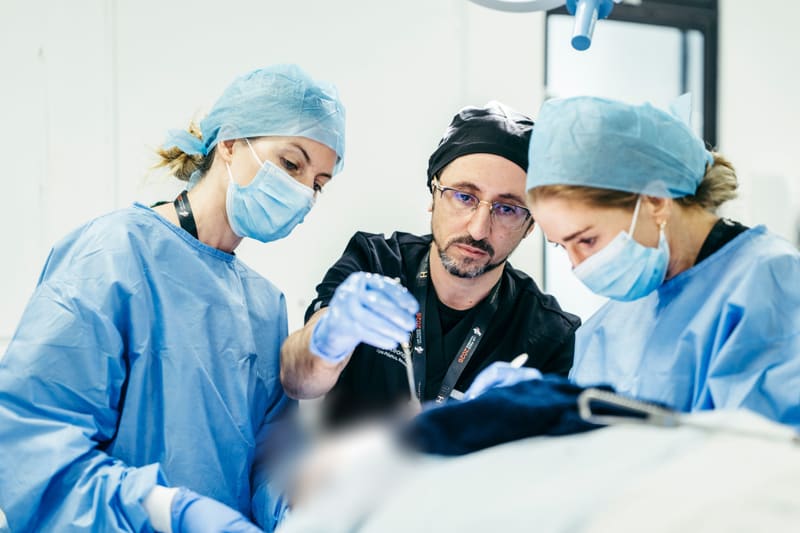
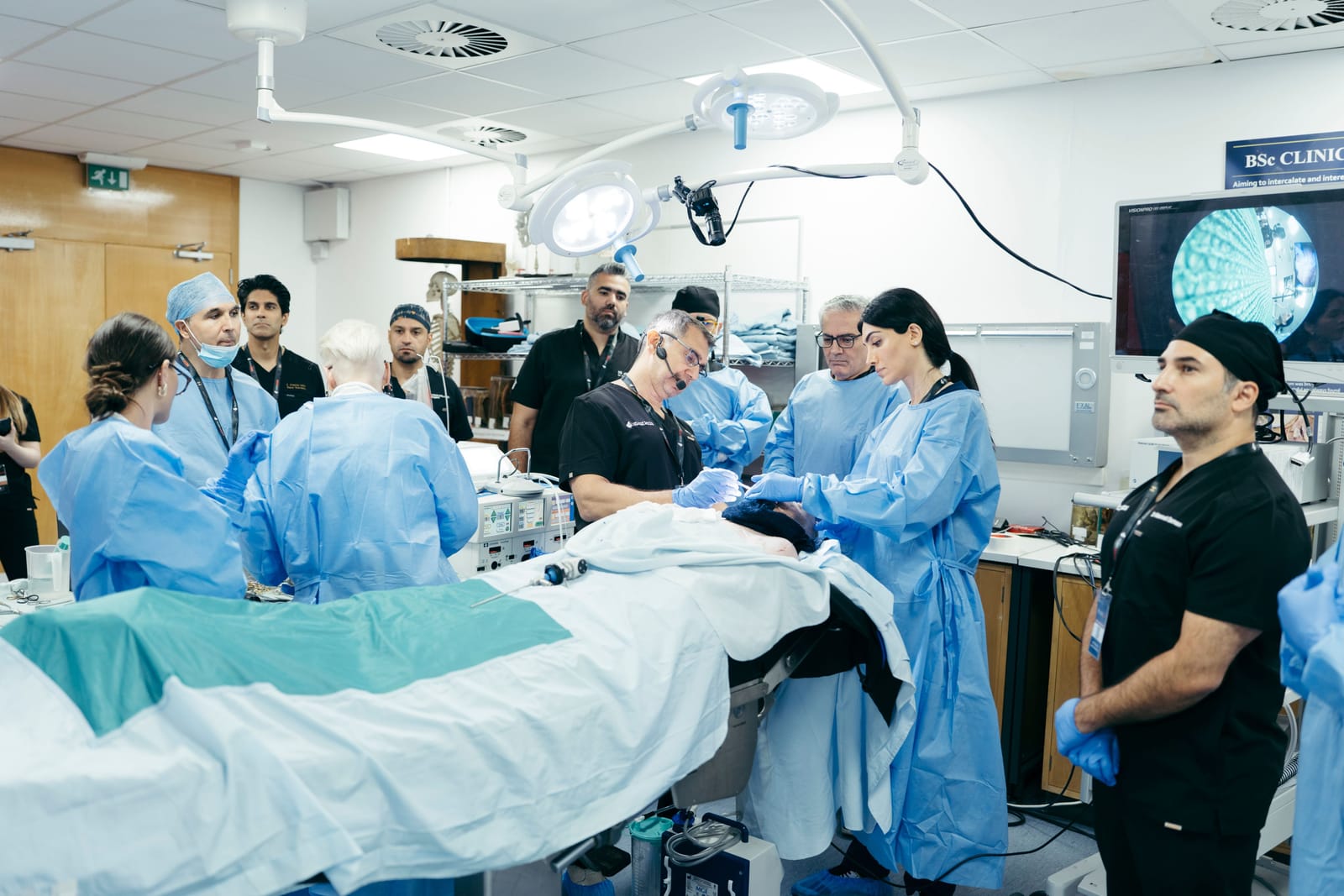
Faculty guiding delegates at a dissection station, UK FACE Congress 2026 cadaver lab

Practical teaching

Practical teaching
A dedicated fresh-frozen cadaver teaching day.
Specimens
Fresh-frozen cadavers.
Teaching format
Step-by-step demonstrations, supervised practice and faculty checkpoints.
Faculty feedback
A directed practice session with individual feedback closes the practical day.
Introductory course fee
Standard fee £7,500£5,950Save £1,550
Choose your place

Who is teaching

Course faculty

Dr Emre Ilhan

Guest Faculty & Live Surgeon

Dr Emre Ilhan

Türkiye

Rhinoplasty Surgeon and Educator · Istanbul

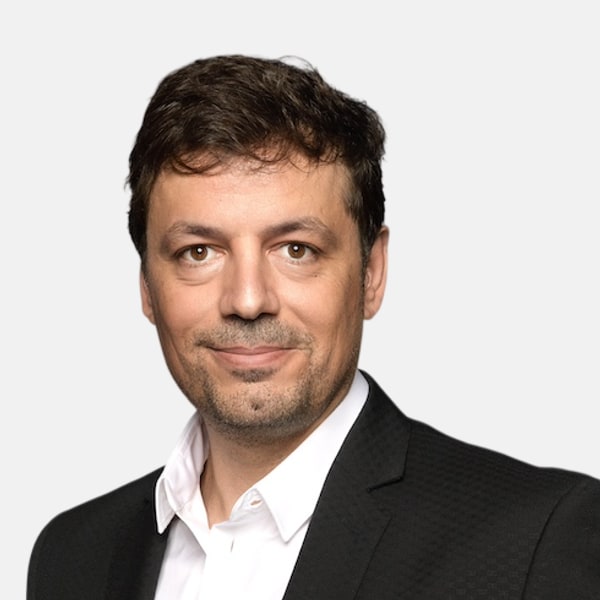
Dr Emre Ilhan is an Istanbul-based rhinoplasty surgeon, founder of Surgicall Academy and a leading educator in precision rhinoplasty. His teaching brings together direct visual assessment, powered instrumentation and ultrasonic techniques to examine how the nasal framework can be shaped with greater control.

Teaching focus: Precision philosophy, sidewall engineering, powered cylindrical burrs, piezo and operative judgement.

Dr Fas Arshad

Host & Chair

Dr Fas Arshad

United Kingdom

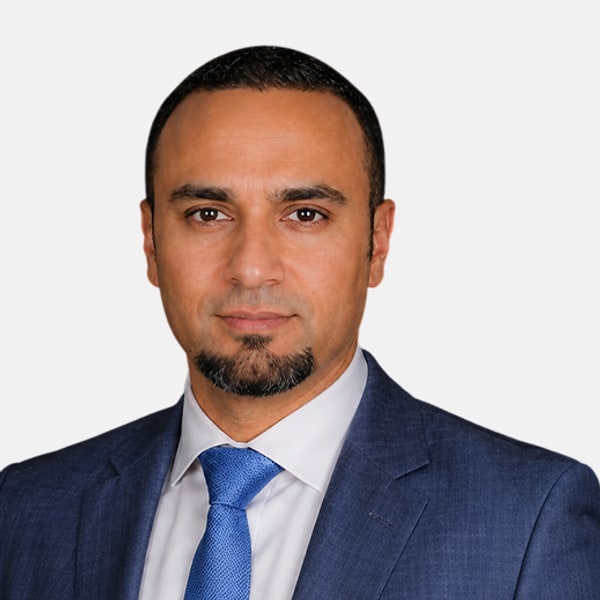
Consultant ENT and Facial Plastic Surgeon · President & Founder, UK FACE Congress

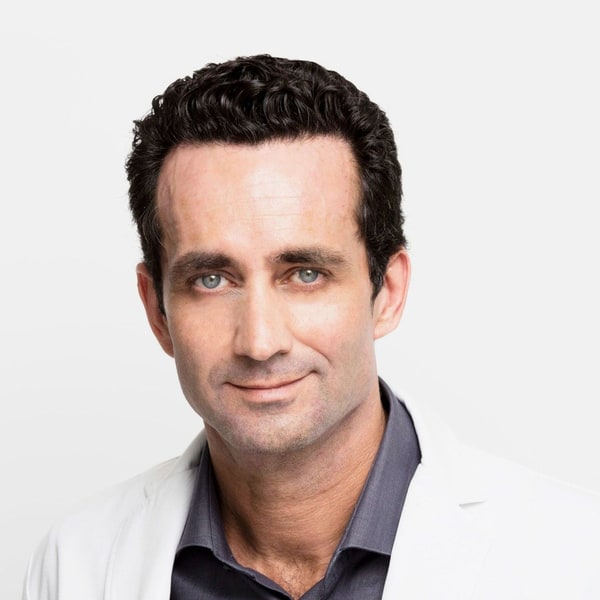
Dr Fas Arshad is a consultant ENT and facial plastic surgeon with a background in head and neck surgery and advanced fellowship training at Oxford University Hospitals. He has a busy rhinoplasty practice, performing more than 150 rhinoplasties each year, and uses both structural and preservation approaches.

Teaching focus: Assessment and planning, structural and preservation decision-making, moderation and challenging cases.

From the organisers

Previous UK FACE Congress teaching and discussion

The masterclasses are run by the team behind the UK FACE Congress, the hospital-based live surgery congress first held at Leeds Private Hospital in 2026.

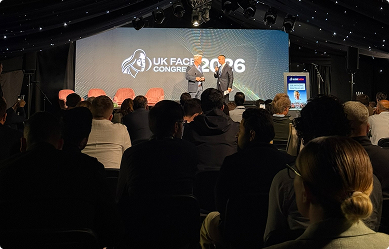
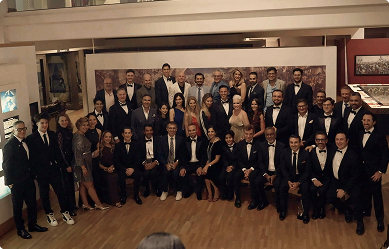
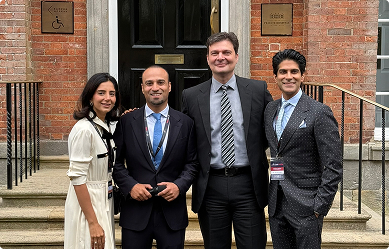
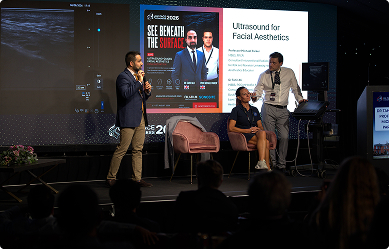
Live case discussion on the UK FACE Congress 2026 stageDelegates in the UK FACE Congress 2026 auditoriumUK FACE Congress 2026 faculty group photographFaculty outside Leeds Private Hospital during UK FACE Congress 2026

Programme

Detailed programme

Proposed programme, version 7 November 2026

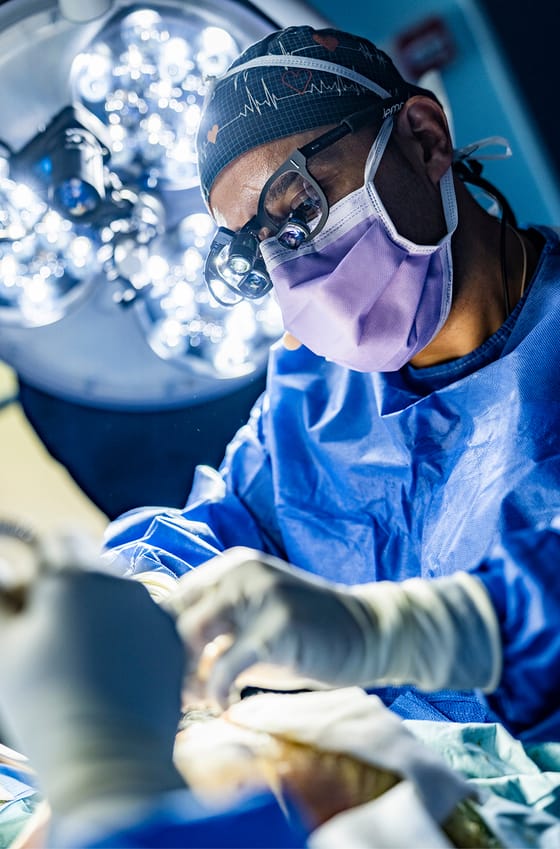
Dr Fas Arshad operating in theatre (2026 photograph)
Day 1 · Saturday 20 March 2027

Live surgery and advanced technical teaching

Case planning, live surgery and debrief, powered drills and cylindrical burrs, piezo and challenging cases.

Hands-on dissection with faculty guidance, UK FACE Congress 2026 cadaver lab
Day 2 · Sunday 21 March 2027

Fresh-frozen cadaver dissection

Anatomical orientation, supervised powered-instrument and piezo practice, dorsal strategy and structural support, with directed practice and feedback.

Download the course brochure

The full programme, faculty and course information in one PDF, to read offline or share with colleagues.

Download brochure
Day 1Saturday 20 March 2027 · Live surgery and advanced technical teaching
TimeSessionLearning focus
08:15–08:45Registration and refreshmentsArrival and course orientation.
08:45–09:00Welcome and objectivesTeaching goals and live-surgery viewing format.
09:00–09:30Case assessment and operative planningAnatomy, functional concerns, dorsal strategy and tip strategy.
09:30–12:30Live surgery teaching sessionLive operating surgeon: Dr Emre Ilhan · Moderator: Dr Fas ArshadModerated observation of assessment, exposure and operative decisions as the case progresses.
12:30–13:15LunchContinued viewing arrangements explained if surgery is ongoing.
13:15–14:30Live teaching and case debriefLive operating surgeon: Dr Emre Ilhan · Moderator: Dr Fas ArshadRemaining stages, support strategy and reasons for operative adaptations.
14:30–15:10Powered drills and cylindrical burrsInstrument selection, handling principles and sidewall engineering.
15:10–15:25Refreshment break
15:25–16:05Piezo in advanced rhinoplastyApplications, access, limitations and integration with powered instrumentation.
16:05–16:40Challenging casesDorsal strategy, structural support and technical pitfalls.
16:40–17:00Preparing for the practical dayDissection objectives and faculty questions.
Day 2Sunday 21 March 2027 · Fresh-frozen cadaver dissection
TimeSessionLearning focus
08:45–09:00Arrival and preparationPreparation for practical teaching.
09:00–09:30Practical orientationLearning objectives and teaching sequence.
09:30–10:45Anatomical orientation and exposureDorsal and sidewall landmarks, with faculty checkpoints.
10:45–11:00Refreshment break
11:00–12:30Powered drills and cylindrical burrsSupervised handling and planned sidewall engineering exercises.
12:30–13:15Lunch
13:15–14:30Piezo practical teachingPlanned practical applications and integration into the operative approach.
14:30–14:45Refreshment break
14:45–16:00Dorsal strategy and structural supportPractical exploration within the approved teaching programme.
16:00–16:45Directed practice and feedbackQuestions, selected practical tasks and individual feedback.
16:45–17:00Course reviewKey learning points and further professional development.

Programme subject to refinement. Live surgery timings may change to accommodate clinical requirements. All times are local UK time.

Choose your place

Before you book

Who the course is for

Designed for experienced surgeons seeking advanced professional education in facial aesthetic surgery.

Included in the fee

  • Day 1: live operative teaching, lectures, moderated discussion and case debrief
  • Day 2: supervised fresh-frozen cadaver teaching
  • Teaching equipment access, as confirmed by the course team
  • Course materials
  • Lunch and refreshments on both days

Not included

  • Travel
  • Accommodation
  • Admission to the UK FACE Congress (21–23 July 2027)

Tickets

Two ways to attend

British Advanced Rhinoplasty Course · 20–21 March 2027 · Leeds

Hands-on Dissector

Introductory course fee
Standard fee £7,500£5,950Save £1,550

Live surgery and lectures, followed by supervised cadaver dissection with powered instruments and ACTEON piezo.

  • Both days: live surgery, lectures, moderated discussion and case debrief
  • Supervised hands-on fresh-frozen cadaver teaching
  • Course materials, lunch and refreshments

Secure checkout by Stripe. Cards and Klarna accepted.

Observer

Total course fee
£3,250

Both teaching days: live surgery, lectures and observation of cadaver demonstrations. No dissection or practical instrument use.

  • Both days: live surgery, lectures, moderated discussion and case debrief
  • Observation of the fresh-frozen cadaver teaching
  • Course materials, lunch and refreshments

Lab observation only – no dissection or practical instrument use.

Secure checkout by Stripe. Cards and Klarna accepted.

Need an invoice or have a question? Contact the course team. Travel, accommodation and the July congress are not included.

Visitor information

Planning your visit to Leeds

Venue

Hosted by Leeds Private Hospital, Red Hall Lane, Leeds LS17 8NB.

Cadaver lab venue to be confirmed.

Open in Google Maps

Timings

Allow 08:00–18:00 each day; see the programme for session times.

Live surgery timings may change for clinical reasons.

Getting to Leeds

Leeds Bradford Airport is the nearest airport, and Manchester Airport offers a wider choice of international flights. Leeds railway station has direct trains from London King’s Cross.

Accommodation & access

See our suggested hotels, and tell the course team about any accessibility requirements before you travel.

Accommodation & travel

FAQs

Questions surgeons ask before booking

Who is the course for?

Qualified surgeons with relevant rhinoplasty experience who want to develop their understanding of precision techniques, powered instruments and piezo. Previous use of cylindrical burrs or piezo is not essential; teaching progresses from instrument orientation to advanced applications. Contact the course team if you are unsure which ticket suits your experience.

What will I see during live surgery?

Teaching starts with patient assessment, operative planning and surgical markings. Dr Emre Ilhan’s operation is presented in extended blocks with moderation by Dr Fas Arshad, connecting the visible anatomy with the decisions being made. The sequence adapts to the patient and clinical requirements.

Will I use ACTEON equipment myself?

Hands-on places include supervised ACTEON piezo use during the cadaver workshop, within the published station allocation. Observer places include viewing and discussion, without dissection or practical instrument use.

How does this relate to preservation and structural rhinoplasty?

Teaching explores how anatomy, contour, support and function influence the choice of a preservation, structural or combined approach. It considers precision instrumentation within that plan, rather than presenting one instrument as a solution for every nose.

Can I attend without dissecting?

Yes. The £3,250 Observer package includes both days: live surgery, lectures, case discussion and observation of fresh-frozen cadaver teaching. It does not include dissection or practical instrument use. Upgrades can be requested, subject to hands-on availability.

What does hands-on participation include?

The second day is a dedicated fresh-frozen cadaver teaching day with step-by-step demonstrations, supervised practice, faculty checkpoints and a directed practice and feedback session. Supervised hands-on participation is included with the hands-on dissector place; observers watch the demonstrations and join the discussion.

Which faculty attend each day?

Dr Fas Arshad hosts and chairs the course. The faculty attending each day will be confirmed with the final programme.

What is the course fee?

The introductory Hands-on Dissector fee is £5,950 for both days (standard fee £7,500). Payment is in full when you book online. The Observer place is £3,250 for both days, with no dissection or practical instrument use.

What is included in the fee?

Live operative teaching, lectures, moderated discussion and a case debrief on Day 1; supervised fresh-frozen cadaver teaching on Day 2; teaching equipment access as confirmed by the course team; course materials; and lunch and refreshments on both days. Travel and accommodation are not included, and the course fee does not include admission to the UK FACE Congress in July.

Can I pay a deposit?

Online booking is for the full course fee. To ask about other payment arrangements, contact the course team at info@ukfacecongress.co.uk.

Can my institution pay by invoice?

Yes. Contact the course team at info@ukfacecongress.co.uk to request an invoice for institutional payment.

What happens if I cancel or transfer my place?

Cancellations and transfers are covered by our booking terms. Please read them before booking, or ask the course team. Read the booking terms.

Are accommodation, recordings or CPD included?

Accommodation is not included; see our accommodation and travel guidance for nearby hotels. Recordings and CPD are not part of the published inclusions. Accommodation & travel.

Who can answer questions before I book?

The UK FACE course team. Email info@ukfacecongress.co.uk or use the enquiry form on this page.

Speak to the course team

Discuss whether this course is right for you

Tell us what you would like to clarify: experience level, hands-on participation or payment. Your enquiry goes straight to the UK FACE course team.

Prefer email? Write to info@ukfacecongress.co.uk.

CourseBritish Advanced Rhinoplasty Course, 20–21 March 2027

Phone

Also in March 2027

Book either course or attend both

18–19 March 2027Leeds, United Kingdom

British Advanced Endoscopic Facelift Course

Live endoscopic surgery and a fresh-frozen cadaver day with an international faculty.

Dr Gad Renert, Dr Edgar Kaminskyi, Dr Artur Díaz Carandell, Dr Marc Mani with Dr Fas Arshad, Host & Chair

  • Day 1Live surgery & lectures
  • Day 2Fresh-frozen cadaver lab
Introductory fee, two daysStandard fee £9,500£7,500
View course
British Advanced Rhinoplasty Course20–21 March 2027 · Leeds, UK

Hands-on Dissector £5,950Observer £3,250

Choose your place