

UK FACE Congress 2027 · International Masterclass

British Advanced Endoscopic Facelift Course

Live patient assessment. Live surgery. Fresh-frozen cadaver teaching.

Follow assessment, markings, dissection and fixation with Dr Gad Renert and expert moderation. Compare faculty approaches, then explore the anatomy through supervised dissection or lab observation.

The UK’s first dedicated endoscopic facelift masterclass combining live patient surgery with fresh-frozen cadaver teaching.

  • 18–19 March 2027
  • Leeds, United Kingdom
  • Live surgery + fresh-frozen cadaver lab
Full DissectorStandard fee £9,500£7,500
Observer£3,950
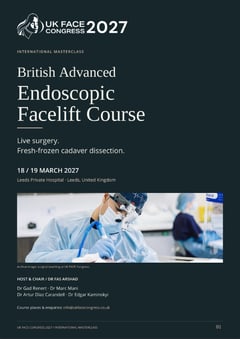
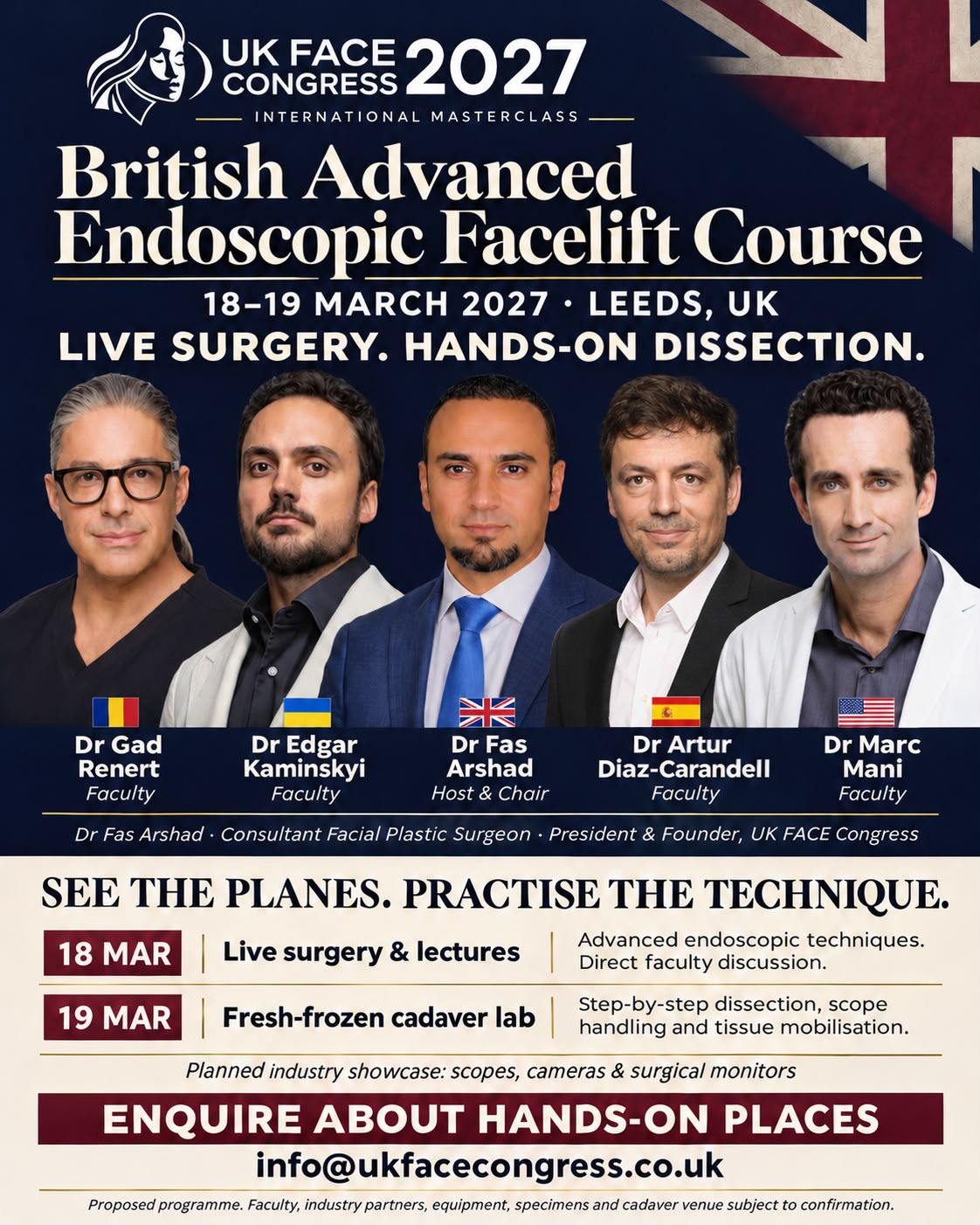
British Advanced Endoscopic Facelift Course flyer: 18–19 March 2027, Leeds. Faculty Dr Gad Renert, Dr Edgar Kaminskyi, Dr Fas Arshad (host and chair), Dr Artur Díaz Carandell and Dr Marc Mani. 18 March live surgery and lectures, 19 March fresh-frozen cadaver lab.

Endorsements & affiliations

  • European Academy of Facial Plastic Surgery (EAFPS)
  • Royal College of Surgeons of England
  • University of Leeds
  • The CPD Certification ServiceCPD application planned
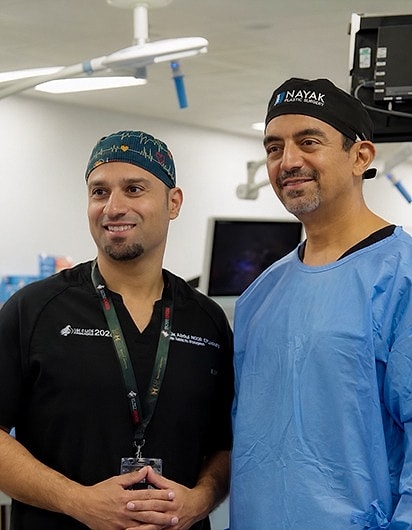
Dr Mike Nayak (right) at the UK FACE Congress 2026 cadaver lab

UK FACE Congress 2026 · Cadaver lab feedback

The quality of the lab is spectacular. Equipment quality has been great. This specimen quality has been great. So I think it’s a really wonderful educational opportunity and a great teaching opportunity.

Dr Mike NayakWorld-renowned facial plastic surgeon, St. Louis, USASpeaking about the UK FACE Congress 2026 cadaver lab
Watch full video

Teaching faculty

Meet the teaching faculty

Read faculty profiles
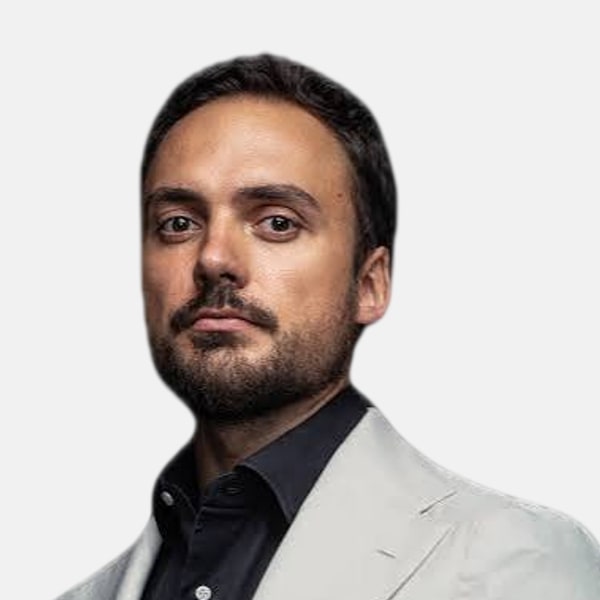
  • Dr Fas Arshad

    Host & Chair

    Dr Fas Arshad

    United Kingdom

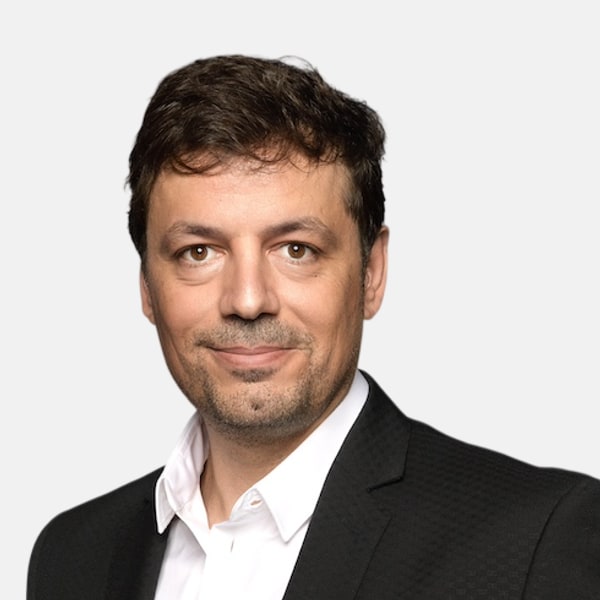
  • Dr Gad Renert

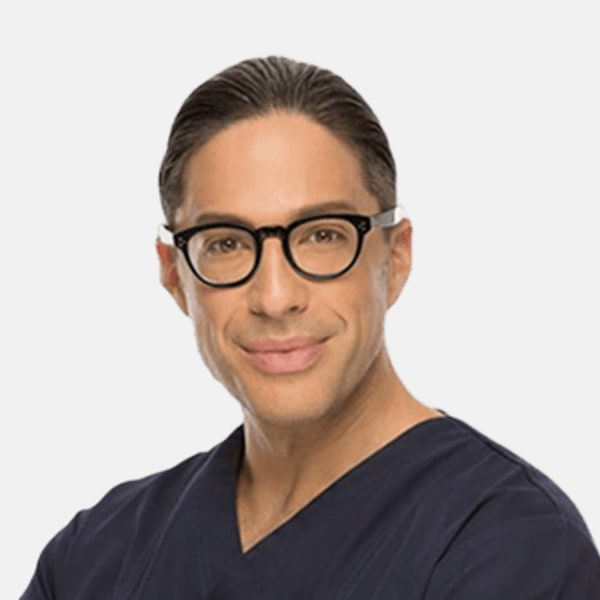
    Live Operating Surgeon & Faculty

    Dr Gad Renert

    Romania

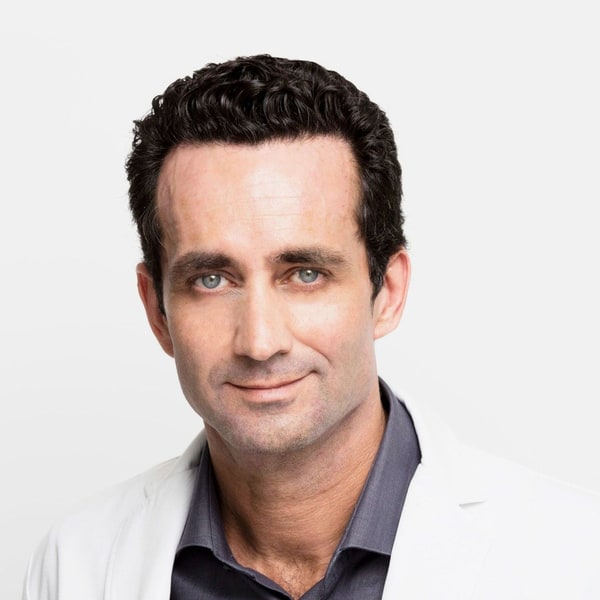
  • Dr Edgar Kaminskyi

    Faculty

    Dr Edgar Kaminskyi

    Ukraine

  • Dr Artur Díaz Carandell

    Faculty

    Dr Artur Díaz Carandell

    Spain

  • Dr Marc Mani

    Faculty

    Dr Marc Mani

    United States

The two-day learning journey

Follow the patient, the plan and the operation.

Two days for experienced surgeons who want a deeper understanding of endoscopic facial surgery. Follow live operative teaching with faculty moderation, then work through the anatomy and technical principles in a supervised, step-by-step fresh-frozen cadaver lab.

Day 1 · Thursday 18 March

Live teaching

Live patient assessment and surgery.

Observe live patient assessment and discussion of suitability, facial analysis and surgical markings. Follow the operative approach, anatomical landmarks, tissue mobilisation and fixation with a dedicated moderator explaining the decisions as the case progresses. Questions are taken at appropriate moments.

See the Day 1 timetable
Day 2 · Friday 19 March

Fresh-frozen cadaver lab

Connect the live teaching with the anatomy.

Connect the live teaching with step-by-step demonstration and fresh-frozen cadaver anatomy. Choose supervised hands-on dissection or observation of the practical teaching.

See the practical day

From observation to guided practice

  1. 01

    Observe

    Follow live decisions.

  2. 02

    Interpret

    Connect image and anatomy.

  3. 03

    Practise

    Work through supervised tasks.

  4. 04

    Reflect

    Use faculty feedback.

What an experienced surgeon gains

Move beyond watching the technique. Examine how and why it is used.

01

Evaluate the approach

Discuss patient selection and the relationship between endoscopic, hybrid and open approaches.

02

Orient the endoscopic view

Connect the screen image with anatomical planes and landmarks during demonstration and supervised lab tasks.

03

Work on coordinated handling

Explore scope orientation and instrument coordination in the approved practical setup.

04

Examine mobilisation and support

Discuss and practise the planned principles of mobilisation, vector selection and fixation under faculty guidance.

05

Recognise limits and alternatives

Use the case debrief and pitfalls session to discuss when a different approach may be appropriate.

Understand the system as well as the technique.

Explore how endoscopes, camera systems and monitors support visual orientation and coordinated work. The course will distinguish the systems demonstrated by faculty from equipment available for delegate practice.

Advanced technical questions

The decisions that define an endoscopic facelift

Examine the choices behind the operation: frontal-branch management, the extent of release, lifting vectors, tissue fixation and the endoscopic view. Compare the faculty’s approaches through live operative commentary, 3D anatomy and practical teaching.

Managing the frontal branch

Frontal-branch management: isolation, tissue preservation and the implications for lift and nerve function. Compare deliberate isolation with approaches that preserve a surrounding tissue cuff, and discuss how dissection strategy affects mobilisation, lifting vectors and nerve function, including temporary weakness and recovery.

From release to support

Explore the relationship between retaining structures, tissue mobilisation and the support required to maintain the intended lifting vector.

Tissue-to-tissue fixation

Dr Renert’s tissue-to-tissue fixation and slip-knot technique; cabling and suspension sutures, suture materials, anchoring points and vector selection.

Fixation options in context

Compare soft-tissue fixation to deep temporal fascia, bony screw fixation where appropriate, and bioabsorbable soft-tissue fixation devices such as ENDOTINE Ribbon. Discuss the indications and limitations of each.

The endoscopic view

Endoscope selection, lens angle, scope handling, 4K UHD camera systems, monitors and coordination between the operative view and the surgeon’s instruments.

Day 2 · Fresh-frozen cadaver lab

Work through the anatomy. Ask the question. Try the technique.

The second day is dedicated to fresh-frozen cadaver teaching. Follow faculty demonstrations, work through supervised practical tasks and use feedback checkpoints to examine your orientation, handling and understanding. The planned sequence covers temporal access, endoscopic visualisation of the midface planes, tissue mobilisation, lifting vectors and fixation principles.

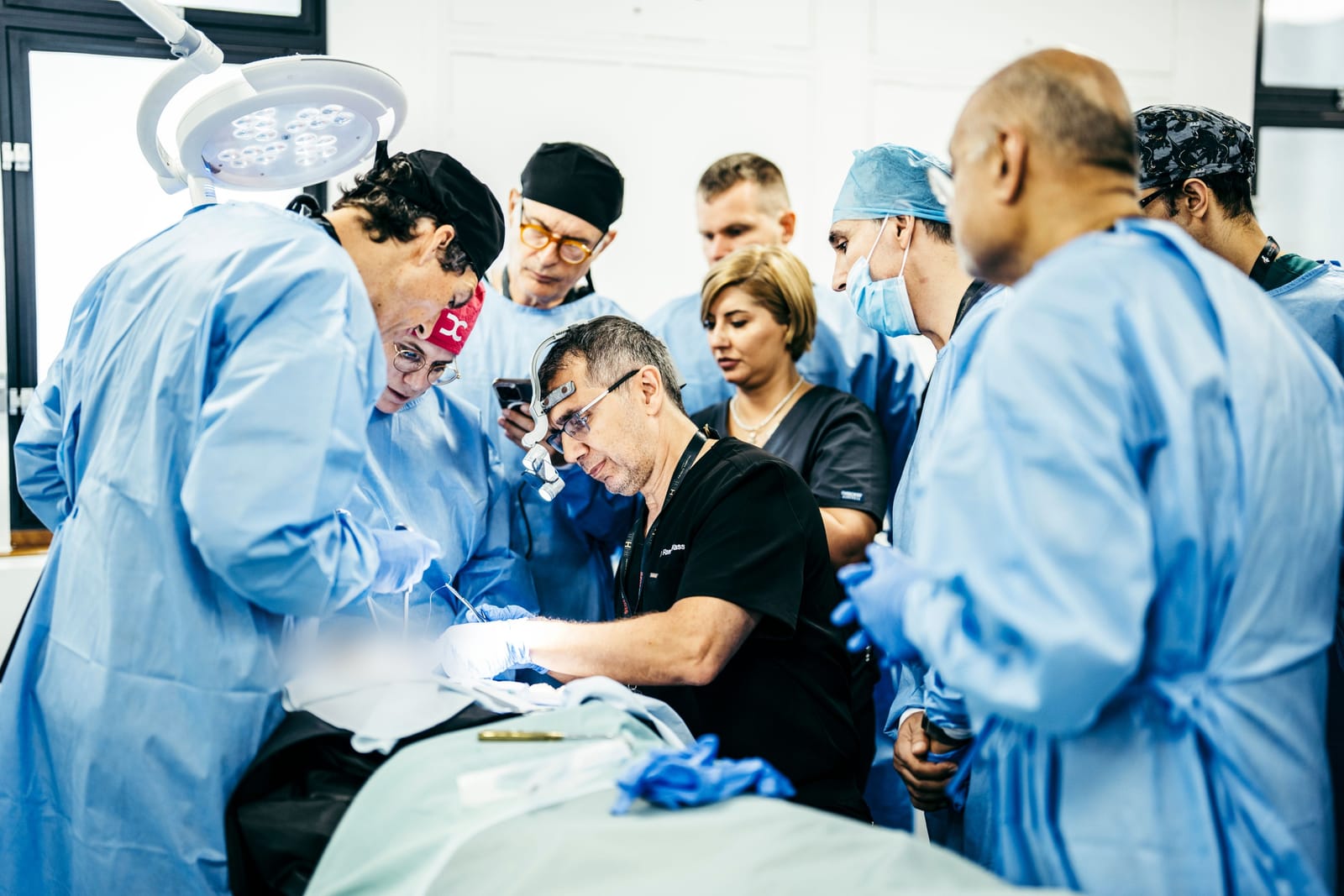
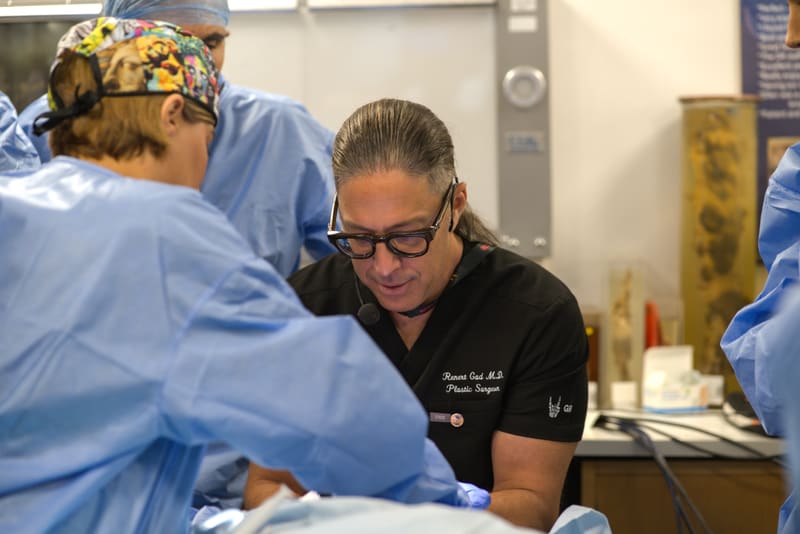
Dr Gad Renert teaching at the dissection table, UK FACE Congress 2026 cadaver lab

Practical teaching

Practical teaching
A dedicated fresh-frozen cadaver teaching day.
Specimens
Fresh-frozen cadavers.
Teaching format
Step-by-step demonstrations, supervised practice and faculty checkpoints.
Faculty feedback
A directed practice session with individual feedback closes the practical day.
Introductory course fee
Standard fee £9,500£7,500Save £2,000
Choose your place

Who is teaching

Course faculty

Dr Fas Arshad

Host & Chair

Dr Fas Arshad

United Kingdom

Consultant Facial Plastic Surgeon · Founder, UK FACE Congress

Dr Fas Arshad brings together the international faculty, live surgery and practical programme for this dedicated UK masterclass. His background in head and neck surgery informs his approach to advanced facial rejuvenation and deep plane face and neck lifting.

Teaching focus: Patient selection, operative planning and hybrid endoscopic/open deep plane face and neck lifting.

Dr Gad Renert

Live Operating Surgeon & Faculty

Dr Gad Renert

Romania

Senior Consultant Plastic and Aesthetic Surgeon · Bucharest

Dr Gad Renert is a senior plastic and aesthetic surgeon based in Bucharest, with a clinical focus on endoscopic facial rejuvenation. He is the first author of a 2026 Aesthetic Surgery Journal publication reporting 300 consecutive endoscopic facelift cases, co-authored with Dr Edgar Kaminskyi and Dr Artur Díaz Carandell.

Teaching focus: Live endoscopic facelift surgery, the published 300-case experience and step-by-step technical teaching.

Dr Edgar Kaminskyi

Faculty

Dr Edgar Kaminskyi

Ukraine

MD, PhD · Plastic Surgeon and ENT Specialist · Practising in Italy

Dr Edgar Kaminskyi combines a background in plastic surgery and ENT with a distinctive contribution to anatomical education: he personally creates original 3D surgical animations that translate complex anatomy and operative sequences into clear visual explanations.

Teaching focus: 3D anatomy, endoscopic orientation and visual understanding of surgical planes.

Dr Artur Díaz Carandell

Faculty

Dr Artur Díaz Carandell

Spain

Facial and Maxillofacial Surgeon · Barcelona

Dr Artur Díaz Carandell brings an anatomy-led perspective shaped by his background in head and neck reconstruction and facial palsy surgery. His practice focuses on facial rejuvenation, including endoscopic deep plane facelifting, and he is founder and director of ENDOFACE Masters Barcelona.

Teaching focus: Surgical anatomy, temporal access, retaining structures and anatomical boundaries.

Dr Marc Mani

Faculty

Dr Marc Mani

United States

Plastic Surgeon · Beverly Hills, Los Angeles

Dr Marc Mani is a Beverly Hills plastic surgeon and an innovator in endoscopic face and neck lifting. His published work describes the Scarless Lift, an endoscopic composite-flap approach intended to avoid a preauricular incision in appropriately selected patients.

Teaching focus: Scarless Lift principles, patient selection, composite-flap mobilisation, vectors and fixation.

From the organisers

Previous UK FACE Congress teaching and discussion

The masterclasses are run by the team behind the UK FACE Congress, the hospital-based live surgery congress first held at Leeds Private Hospital in 2026.

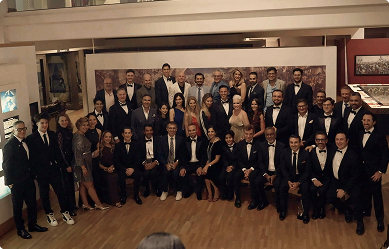
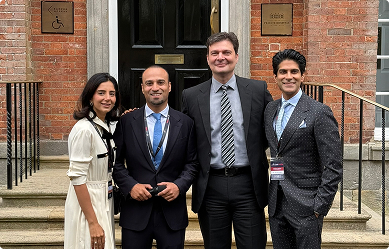
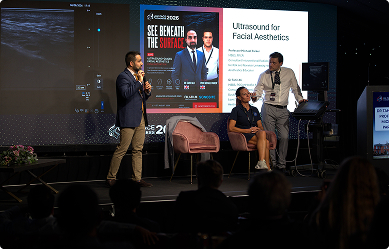
Live case discussion on the UK FACE Congress 2026 stageDelegates in the UK FACE Congress 2026 auditoriumUK FACE Congress 2026 faculty group photographFaculty outside Leeds Private Hospital during UK FACE Congress 2026

Programme

Detailed programme

Proposed programme, version 11 November 2026

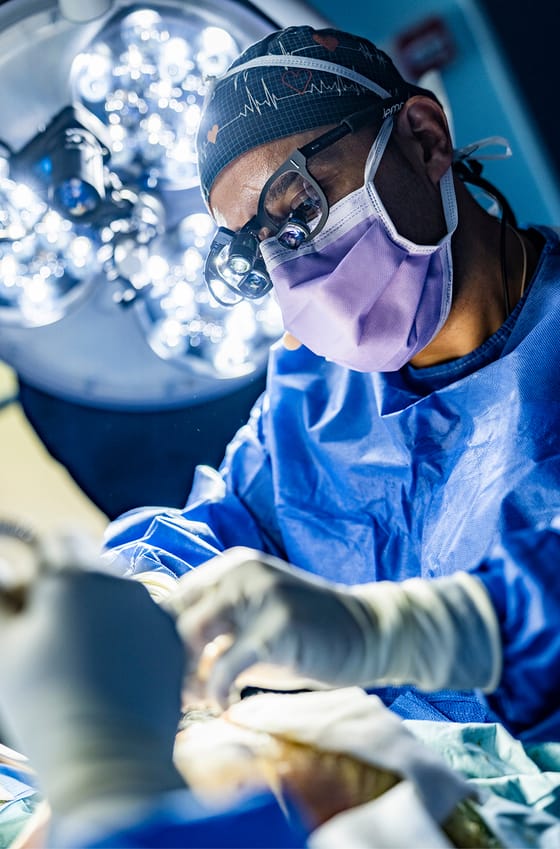
Dr Fas Arshad operating in theatre (2026 photograph)
Day 1 · Thursday 18 March 2027

Live surgery and advanced endoscopic teaching

Patient selection, live endoscopic surgery with faculty moderation, anatomy and planes, endoscopic orientation and lifting principles.

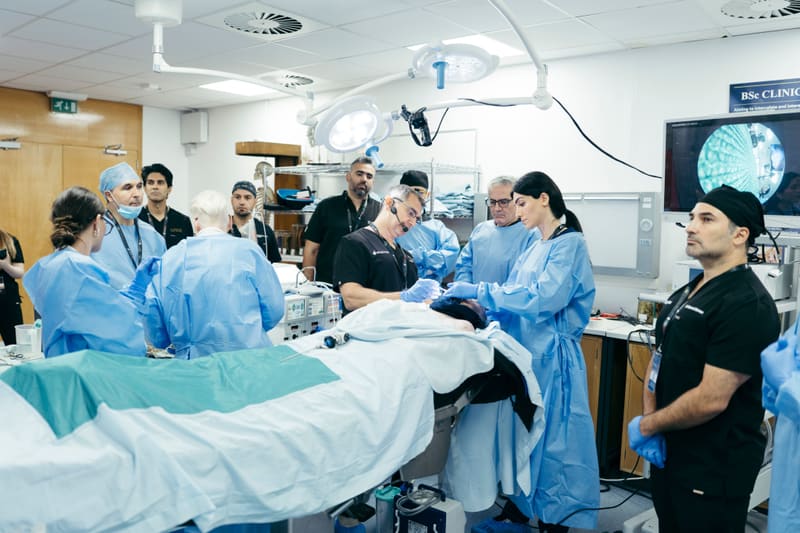
Cadaver dissection station with the endoscopic view on the monitor, UK FACE Congress 2026 cadaver lab
Day 2 · Friday 19 March 2027

Fresh-frozen cadaver dissection

Temporal access, endoscopic visualisation and midface planes, tissue mobilisation, lifting vectors and fixation, with directed practice and feedback.

Download the course brochure

The full programme, faculty and course information in one PDF, to read offline or share with colleagues.

Download brochure
Day 1Thursday 18 March 2027 · Live surgery and advanced endoscopic teaching
TimeSessionLearning focus
08:15–08:45Registration and refreshments
08:45–09:00Welcome and course objectivesDr Fas ArshadHow the live case and the cadaver lab connect.
09:00–09:20Patient selection and operative planningDr Fas ArshadEndoscopic, hybrid and open approaches; planning the live case.
09:20–11:20Live surgery: patient markings, surgical planning and endoscopic approachLive operating surgeon: Dr Gad RenertFollow the live case with ongoing moderated commentary on anatomical orientation and operative decisions.
11:20–11:35Refreshment breakContinued live viewing.
11:35–11:55Surgical anatomy of the endoscopic deep plane faceliftDr Artur Díaz CarandellLayers, retaining structures, landmarks and anatomical danger zones.
11:55–12:153D visualisation anatomy of the endoscopic deep plane faceliftDr Edgar KaminskyiThree-dimensional relationships translated into the endoscopic view.
12:15–12:35Indications and patient selectionDr Marc ManiThe limits of the approach and the features that guide selection.
12:35–13:15LunchContinued live viewing.
13:15–13:40The technique step by step: Dr Marc Mani’s approachDr Marc ManiOperative sequence, tissue mobilisation, lifting vectors and support.
13:40–15:20Live surgery: mobilisation and operative decisionsLive operating surgeon: Dr Gad RenertExtended live observation with the moderator discussing the developing case and inviting questions at appropriate moments.
15:20–15:35Refreshment breakContinued live viewing.
15:35–15:55From open deep plane to endoscopic and hybrid faceliftingDr Fas ArshadChoosing and adapting the approach; when an alternative or combined strategy is appropriate.
15:55–17:00Live surgery: lifting, support and final stagesLive operating surgeon: Dr Gad RenertFollow the relevant stages with moderated discussion of vectors, fixation and adaptations to the operative plan.
17:00–17:15Live case review and faculty questionsDr Gad Renert · Dr Fas Arshad · FacultyPitfalls, difficult decisions and the learning priorities for Friday’s cadaver lab.

4 hours 45 minutes of dedicated live-surgery programme time. Live viewing remains available while surgery is in progress, including during breaks and lunch. Operative themes follow the clinical sequence; they are not fixed surgical milestones.

Day 2Friday 19 March 2027 · Fresh-frozen cadaver dissection
TimeSessionLearning focus
08:45–09:00Arrival and practical orientation
09:00–09:25The technique step by step: Dr Gad Renert’s approachDr Gad RenertReview the live approach and set priorities for dissection.
09:25–10:45Module 1: Surgical anatomy and temporal accessDr Artur Díaz Carandell · Dr Edgar KaminskyiLayers, landmarks, temporal access and orientation to the endoscopic view.
10:45–11:00Refreshment break
11:00–12:30Module 2: Endoscopic deep plane and midface dissectionDr Gad Renert · Dr Marc ManiAnatomical planes and boundaries, scope handling and instrument coordination.
12:30–13:15Lunch
13:15–14:30Module 3: Tissue mobilisation and releaseDr Gad Renert · Dr Artur Díaz CarandellMobilisation, retaining structures and anatomical limits, with faculty checkpoints.
14:30–14:45Refreshment break
14:45–16:00Module 4: Lifting vectors, fixation and hybrid strategiesDr Marc Mani · Dr Fas ArshadVectors and support; how anatomy informs the choice of approach.
16:00–16:45Directed practice and faculty feedbackAll facultyRevisit selected tasks, compare approaches and discuss individual questions.
16:45–17:05Results and longer outcomesDr Marc Mani · Dr Gad RenertResults, durability, limitations and critical assessment.
17:05–17:25What’s next? Future of endoscopic facial surgery (AI)Dr Gad RenertEmerging technology and future directions.
17:25–17:30Course review and closing remarksDr Fas Arshad

Programme subject to refinement. Live surgery timings may change to accommodate clinical requirements. All times are local UK time.

Choose your place

Before you book

Who the course is for

For experienced surgeons involved in facial aesthetic surgery who want focused education in endoscopic approaches, anatomical orientation and practical technique.

Included in the fee

  • Day 1: live operative teaching, lectures, moderated discussion and case debrief
  • Day 2: supervised fresh-frozen cadaver teaching
  • Teaching equipment access, as confirmed by the course team
  • Course materials
  • Lunch and refreshments on both days

Not included

  • Travel
  • Accommodation
  • Admission to the UK FACE Congress (21–23 July 2027)

Tickets

Two ways to attend

British Advanced Endoscopic Facelift Course · 18–19 March 2027 · Leeds

Full Dissector

Introductory course fee
Standard fee £9,500£7,500Save £2,000

Live surgery and lectures, followed by supervised hands-on fresh-frozen cadaver teaching.

  • Both days: live surgery, lectures, moderated discussion and case debrief
  • Supervised hands-on fresh-frozen cadaver teaching
  • Course materials, lunch and refreshments

Secure checkout by Stripe. Cards and Klarna accepted.

Observer

Total course fee
£3,950

Live surgery, lectures and observation of the fresh-frozen cadaver teaching. No hands-on dissection or practical instrument use.

  • Both days: live surgery, lectures, moderated discussion and case debrief
  • Observation of the fresh-frozen cadaver teaching
  • Course materials, lunch and refreshments

Lab observation only – no dissection.

Secure checkout by Stripe. Cards and Klarna accepted.

Need an invoice or have a question? Contact the course team. Travel, accommodation and the July congress are not included.

Visitor information

Planning your visit to Leeds

Venue

Hosted by Leeds Private Hospital, Red Hall Lane, Leeds LS17 8NB.

Cadaver lab venue to be confirmed.

Open in Google Maps

Timings

Allow 08:00–18:00 each day; see the programme for session times.

Live surgery timings may change for clinical reasons.

Getting to Leeds

Leeds Bradford Airport is the nearest airport, and Manchester Airport offers a wider choice of international flights. Leeds railway station has direct trains from London King’s Cross.

Accommodation & access

See our suggested hotels, and tell the course team about any accessibility requirements before you travel.

Accommodation & travel

FAQs

Questions surgeons ask before booking

Do I need previous endoscopic facelift experience?

No previous experience performing endoscopic facelifts is required. The programme progresses from anatomical foundations and endoscopic orientation to advanced operative concepts and techniques. It is designed for qualified surgeons with relevant facial surgical experience. Experienced endoscopic surgeons can use the course to compare approaches and refine their understanding.

What is the difference between a dissector and an observer?

Both tickets include live-surgery viewing, lectures, moderated discussion and attendance at the cadaver teaching. Dissector places include supervised practical participation within the published station allocation. Observer places include lab observation and discussion, with no hands-on dissection or practical instrument use.

Will I see the patient assessment and surgical markings?

The live programme includes patient assessment, discussion of the surgical plan and markings, followed by moderated operative viewing. The clinical sequence and patient requirements determine the order and content of the live demonstration.

Which equipment and fixation methods will be covered?

Teaching addresses endoscope and camera selection, 4K UHD visualisation principles, scope handling, suture selection and fixation strategies. These include tissue-to-tissue fixation, suspension sutures, fascial anchoring, bony fixation and bioabsorbable devices. The practical equipment available to each ticket type is confirmed by the course team.

What does hands-on participation include?

The second day is a dedicated fresh-frozen cadaver teaching day with step-by-step demonstrations, supervised practice, faculty checkpoints and a directed practice and feedback session. Supervised hands-on participation is included with the full dissector place; observers watch the demonstrations and join the discussion.

How is live surgery viewed?

Delegates observe the live operation with moderated faculty discussion and a case debrief; delegates do not operate on patients. All hands-on work takes place on fresh-frozen cadavers on Day 2. The viewing arrangements are explained at the start of the day, and live surgery timings may change to accommodate clinical requirements.

Which faculty attend each day?

Dr Fas Arshad hosts and chairs the course. The faculty attending each day will be confirmed with the final programme.

What is the course fee?

The introductory Full Dissector fee is £7,500 for both days (standard fee £9,500). Payment is in full when you book online. The Observer place is £3,950 for both days, with no dissection or practical instrument use.

What is included in the fee?

Live operative teaching, lectures, moderated discussion and a case debrief on Day 1; supervised fresh-frozen cadaver teaching on Day 2; teaching equipment access as confirmed by the course team; course materials; and lunch and refreshments on both days. Travel and accommodation are not included, and the course fee does not include admission to the UK FACE Congress in July.

Can I pay a deposit?

Online booking is for the full course fee. To ask about other payment arrangements, contact the course team at info@ukfacecongress.co.uk.

Can my institution pay by invoice?

Yes. Contact the course team at info@ukfacecongress.co.uk to request an invoice for institutional payment.

What happens if I cancel or transfer my place?

Cancellations and transfers are covered by our booking terms. Please read them before booking, or ask the course team. Read the booking terms.

Are accommodation, recordings or CPD included?

Accommodation is not included; see our accommodation and travel guidance for nearby hotels. Recordings and CPD are not part of the published inclusions. Accommodation & travel.

Who can answer questions before I book?

The UK FACE course team. Email info@ukfacecongress.co.uk or use the enquiry form on this page.

Speak to the course team

Discuss whether this course is right for you

Tell us what you would like to clarify: experience level, hands-on participation or payment. Your enquiry goes straight to the UK FACE course team.

Prefer email? Write to info@ukfacecongress.co.uk.

CourseBritish Advanced Endoscopic Facelift Course, 18–19 March 2027

Phone

Also in March 2027

Book either course or attend both

20–21 March 2027Leeds, United Kingdom

British Advanced Rhinoplasty Course

Powered drills, cylindrical burrs and piezo, with live surgery and a fresh-frozen cadaver day.

Dr Emre Ilhan with Dr Fas Arshad, Host & Chair

  • Day 1Live surgery & lectures
  • Day 2Fresh-frozen cadaver lab
Introductory fee, two daysStandard fee £7,500£5,950
View course
British Advanced Endoscopic Facelift Course18–19 March 2027 · Leeds, UK

Full Dissector £7,500Observer £3,950

Choose your place